Saint-Gobain Ireland is celebrating a historic achievement: 90 years of uninterrupted manufacturing, mining, and innovation on the island. The company traces its origins to 1936, when it began as a gypsum mine and plasterboard producer in Kingscourt, County Cavan. Over time, it has expanded into a diverse building materials provider under the global Saint-Gobain group. Its current portfolio includes well-known brands such as Gyproc, Isover, Saint-Gobain Glass, Vetrotech, Weber, K Rend, and K Systems, all contributing to its transition toward full building solutions.
The company’s next strategic focus involves merging these capabilities into unified systems designed for entire buildings rather than individual components. To mark this milestone and outline future growth, Saint-Gobain launched the “Future Foundations” initiative in September. The event opened its Kingscourt facility to industry professionals—including architects, contractors, specifiers, and builders’ merchants—for guided plant tours and interactive feedback sessions.
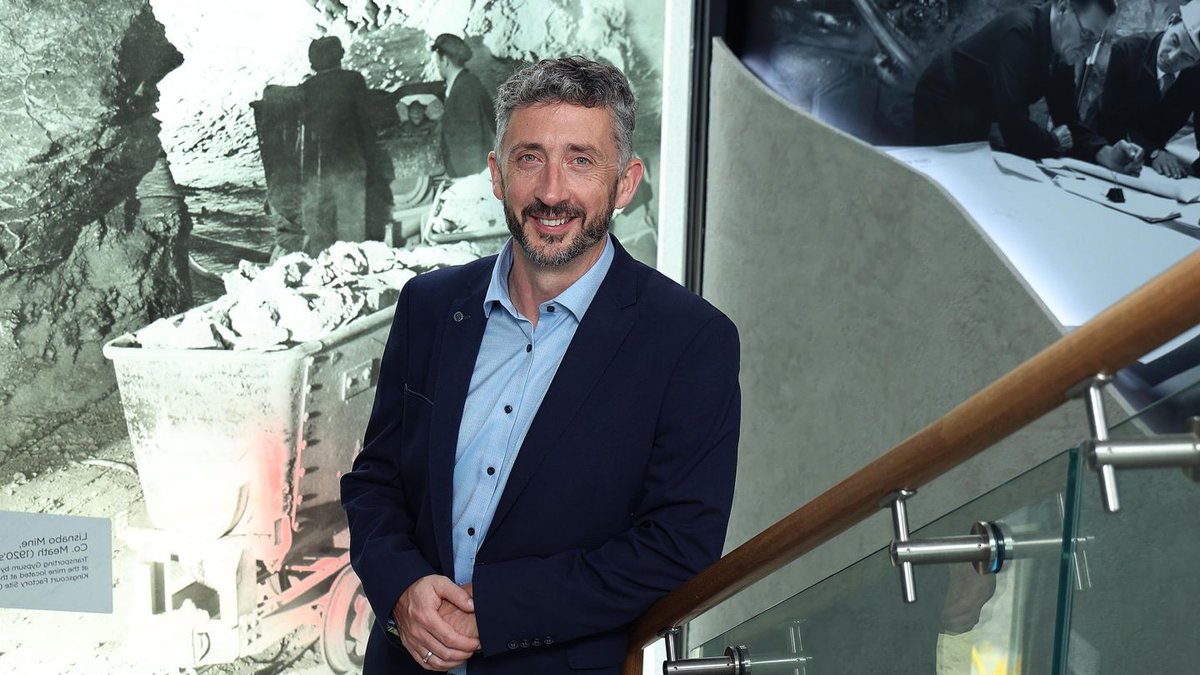
Kieran Holohan, Managing Director of Saint-Gobain Ireland, outlines the company’s transformation from a plaster and plasterboard manufacturer to a leader in insulation, external wall systems, and construction chemicals. The 2005 acquisition by Saint-Gobain combined its deep Irish manufacturing heritage with the group’s global technical expertise, shaping its current operations.
Today, the company supports 500 employees across Ireland, with operations covering gypsum mining, plasterboard production, insulation manufacturing, and life sciences. Unlike many competitors that depend on imported goods, Saint-Gobain maintains full control over its supply chain—from raw material extraction to installation support. This includes specialized roles such as geologists, chemists, mining engineers, and research and development professionals, ensuring every production stage remains domestically managed.
Supply chain resilience through local control
The COVID-19 pandemic and resulting supply chain disruptions exposed vulnerabilities in over-reliance on international suppliers. For Irish contractors and developers, material shortages have delayed essential projects, including housing, schools, and healthcare facilities.
The integrated approach, spanning mining, manufacturing, and on-site support, enables precise carbon accounting and system performance warranties, all verified under Irish testing standards.
During the “Future Foundations” event, Saint-Gobain redefined traditional plant tours as collaborative workshops. Sessions were tailored to specific industry roles: architects explored compliance and circularity, while contractors emphasized installation efficiency and supply reliability. Feedback highlighted a clear demand for solutions addressing daily challenges rather than generic product promotions.
Holohan notes that the push toward integrated systems, where plasterboard, insulation, and fixings are tested as complete assemblies, has become a regulatory requirement in Ireland. Building control officers now require full system certifications to ensure fire safety, acoustic performance, and structural integrity. Saint-Gobain’s testing facilities deliver warrantied solutions, minimizing legal and compliance risks for contractors.
Sustainability drives innovation in materials
Sustainability is now a core priority. Saint-Gobain’s Irish operations align with net-zero carbon targets, incorporating energy-efficient manufacturing, gypsum recycling, and high-performance insulation made from recycled glass. The company also collaborates with CJ Sheeran and The Pallet LOOP to eliminate single-use pallet waste, offering reusable green pallets and compensating customers for returns.
A standout innovation showcased during the tours was the “Custom-Cut” service, which delivers plasterboard pre-cut to exact project specifications, cutting on-site waste and labor. This aligns with broader industry trends toward modern methods of construction (MMC), where prefabrication and digital integration are accelerating project timelines.
The company’s long-term strategy includes a multimillion-euro quarry extension in Monaghan, securing raw material supplies for decades. Beyond manufacturing, Saint-Gobain remains engaged in community initiatives, including support for local sports facilities and a 10-year partnership with Barnardo’s Ireland to assist vulnerable families.
The “Future Foundations” initiative showed Saint-Gobain’s growing role in modern methods of construction (MMC), where prefabrication and digital tools are transforming project delivery. The company’s research and development teams have engineered drywall, acoustic, and thermal systems specifically for factory assembly, supporting Ireland’s efforts to reduce on-site labor shortages and construction delays. These systems integrate seamlessly with timber-frame panels, light-gauge steel frameworks, and modular units, offering contractors pre-tested, code-compliant solutions that speed up build cycles.
This approach distinguishes Saint-Gobain from competitors relying on imported components. Its end-to-end production, from gypsum quarrying to insulation and fixings, eliminates supply bottlenecks. For example, Isover insulation products, now formulated with high recycled glass content, are manufactured in Ireland and tested for compatibility with prefabricated wall and roof panels. The Custom-Cut service further reduces waste in modular construction, where precision is critical. Contractors involved in the “Future Foundations” sessions praised this level of logistical and technical alignment as a key advantage when selecting MMC partners.
Expanding into data-center construction solutions
Saint-Gobain’s expansion into European data-center solutions, led from Dublin, highlights its role in high-growth sectors. The company’s integrated structural, façade, and insulation systems are now tailored for data-center builds, where thermal efficiency, acoustic isolation, and fire resistance are essential. Unlike traditional construction, data centers require ultra-low U-values for cooling systems, and Saint-Gobain’s Isover and Vetrotech products are being specified for these applications. The Dublin-based team works with global research hubs to adapt solutions, such as high-performance glass and mineral wool insulation, to Ireland’s regulatory and climatic conditions, positioning the company as a one-stop supplier for a sector where precision and speed are critical.
The project includes modernized quarrying infrastructure, environmental protections, and expanded processing capacity, allowing Saint-Gobain to meet rising demand for gypsum-based and insulation products without global supply dependencies. The extension also supports the company’s circular economy goals, as recycled gypsum from construction sites will increasingly be reused in production, reducing reliance on virgin materials. Geologists and mining engineers involved in the expansion emphasize that the site’s proximity to transport networks will streamline deliveries to both traditional and MMC projects across Ireland.
