The construction industry is shifting toward modern methods of construction (MMC). As demand grows in education, healthcare, residential, and corporate sectors, modular buildings are becoming the preferred solution for fast, scalable, and high-performance space delivery.
Working through the Modular Market
The expanding modular market presents a challenge. Many vastly different products are classified under the single term “Modular Buildings.” To understand the market, clients and specifying authorities must recognize the clear tiering within off-site construction.
A 3D volumetric modular unit may seem simple. Some assume top-tier facilities are just “a few containers.” This is incorrect. Comparing lower-tier units to high-end modular structures is like comparing an economy car to a high-performance model. Both are cars, but their engineering, integrity, and user experience are in different leagues.
Three Tiers of Modular Buildings
– Tier 1: These are fully compliant, highly-engineered 3D volumetric structures. They are bespoke and designed for long lifetimes. They meet all Building Control Regulations (BCAR), Fire Safety Certification, Thermal Performance (NZEB), and Electrical Standards. They feature high-end aesthetics, superior acoustic insulation, and robust structural integrity.
Read Also: Saint-Gobain Ireland marks 90 years of continuous manufacturing
– Tier 2: This tier includes integrated site welfare units. They are temporary or semi-permanent, stackable units for short-term use, like on construction sites. Compliance levels vary. Finishes are basic, and structural flexibility is limited.
– Tier 3: These are converted shipping containers. They are low-cost, commoditized units. They are often non-compliant with standard building regulations. They frequently lack proper fire ratings, insulation, or certified electrical systems.
The end-use determines the required tier. For short-term use, Tier 2 or 3 may be suitable. For permanent occupation that must comply with planning law, only Tier 1 will ensure regulatory standards, safety, and the ability to get building insurance.
Advantages of Top-Tier Modular Buildings
Unlike traditional construction or lower-tier temporary units, fully compliant modular buildings offer key operational advantages. The precision and automation of a factory environment allow construction under controlled conditions to very high standards. Any quality issues are found and fixed by specialists before the building leaves the factory.
Read Also: Jamaica Tightens Rules on Property Ads
Concurrent off-site manufacturing and site preparation drastically cut project timelines. This enables rapid client occupancy without sacrificing quality. For example, Instaspace Modular built and certified a two-storey, 910 square metre, 50-bedroom residential block in just 12 weeks. A traditional build would take over a year.
High-grade structural steel frameworks allow these facilities to expand vertically or horizontally as operational needs change.
Real-World Applications
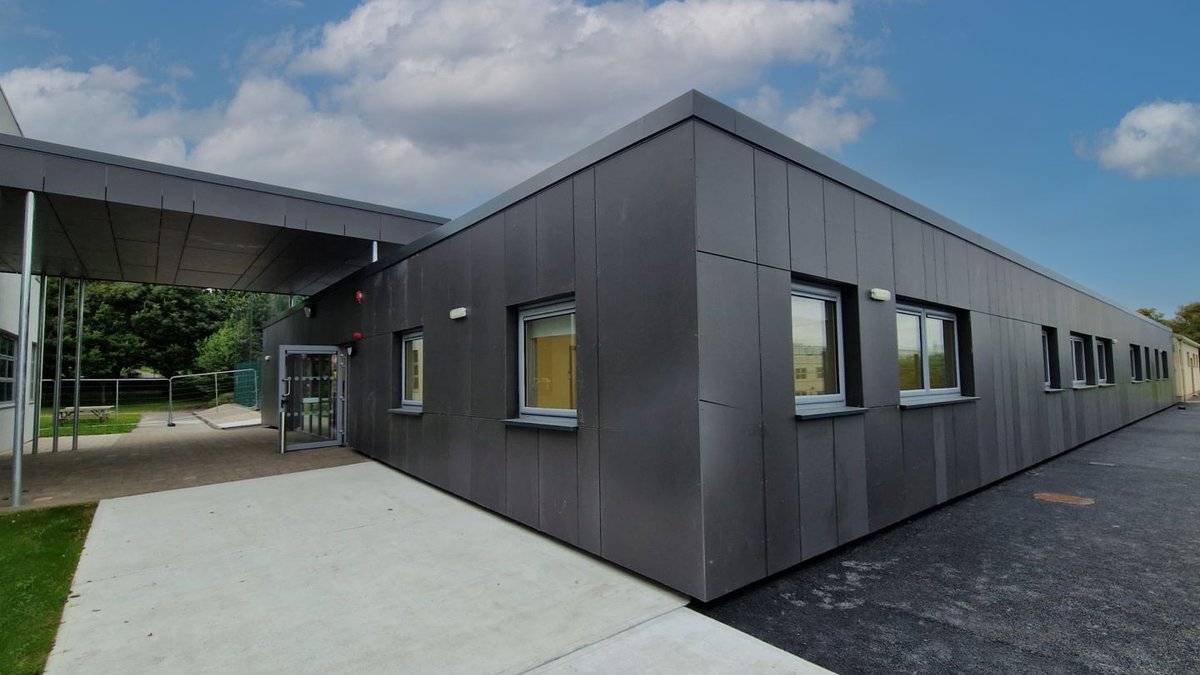
For Sligo College of Further Education & Training, Instaspace designed and installed a single-storey facility. It included specialist healthcare and nursing suites, art & design rooms, veterinary studies rooms, classrooms, and offices. The building features extensive daylighting, high-spec acoustics, and wide corridors. It was delivered complete with regulatory compliance in 20 weeks.
