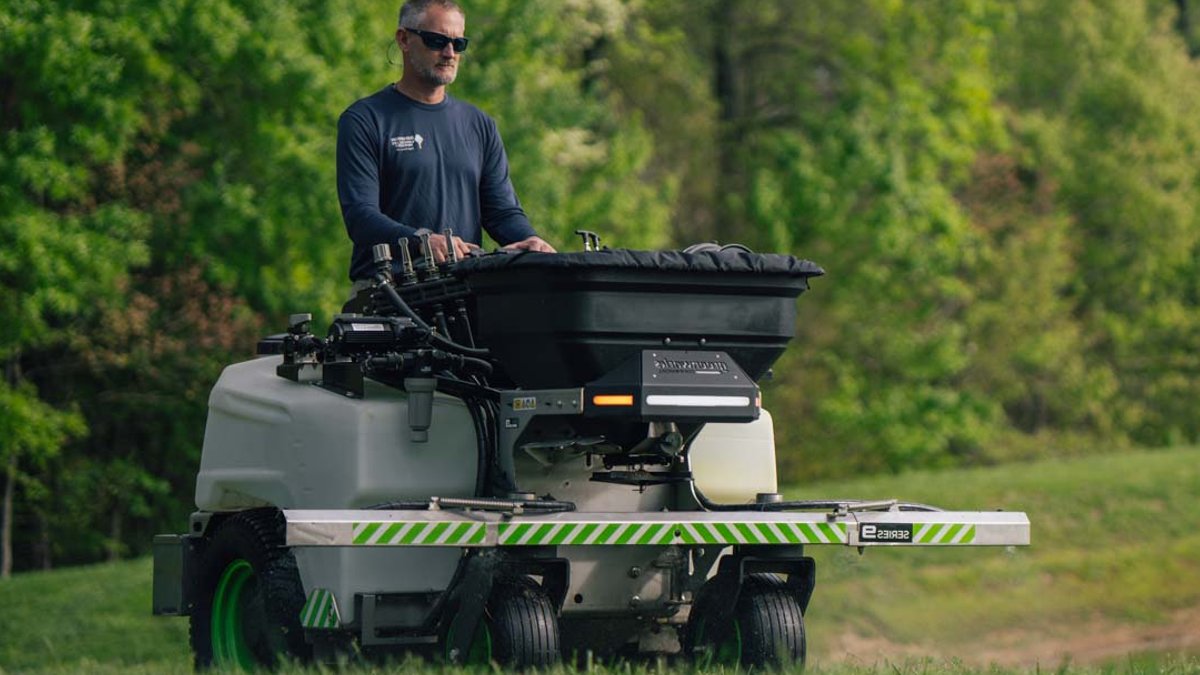
Greenworks Commercial’s Optimus Sprayer Spreader is drawing attention from professional landscapers who need a reliable, battery‑powered solution for large‑area chemical applications.
Battery Power Cuts Maintenance Hassles
Traditional stand‑on units rely on gas engines that sit beneath the spray gear, drawing in fertilizer dust and pesticide particles. That exposure often leads to carburetor fouling and engine wear, making routine service a time‑consuming task.
The new device eliminates those problems by using an electric motor instead of a gasoline engine. Because there is no internal combustion, the risk of contaminating moving parts drops dramatically, and mechanics can focus on routine checks rather than major overhauls.
All‑stainless‑steel construction protects wheel motors and other key components from corrosion, extending service life. The company sourced spray gear from established U.S. manufacturers, so replacement parts are widely available and familiar to service crews.
Daily upkeep is limited to greasing the front caster wheels, flushing the tank when needed, and rinsing the exterior with a hose.
Related: New Laser Tool Offers Enhanced Durability
Performance and Operator Comfort
The unit carries a 60‑gallon tank and a boom that reaches 10 feet wide, allowing coverage of up to 5.5 acres per pass. For granular work, the hopper holds roughly 220 pounds, matching the capacity of leading gas models.
Battery capacity is rated at 8 kWh, delivering up to two full work days before a recharge is required. A charge takes about two and a half hours, so crews can plug the machine in overnight and start fresh each morning.
Speed tops out at 10 mph, which is quicker than many comparable gasoline units. The control screen shows battery level, speed, and diagnostic alerts, while built‑in 4G connectivity can lock the machine remotely if it is stolen.
From a comfort standpoint, the electric drive generates far less heat and vibration than a gas engine, reducing operator fatigue on hot days. Integrated LED lights let crews work in low‑light conditions without adding separate lighting kits.
In contrast to earlier battery tools that required users to adapt to unfamiliar controls, the platform builds on a decade of refinements from the Optimus 9‑series, making the transition feel natural for seasoned operators.
Related: Sealing Drafty Windows Made Easy at Home
Pricing and Market Outlook
At a list price of $24,999.99, the machine sits above some traditional models, but the elimination of fuel, oil, and extensive maintenance can lower total cost of ownership over time. The company also hinted at a smaller version slated for release later this year.
When crews work in residential neighborhoods, the low noise output—66 dB at the operator’s ear and 52 dB at 50 feet—allows earlier starts and later finishes without disturbing nearby residents. That flexibility can translate into more jobs completed during peak seasons.
Comparing this launch to past shifts toward electric equipment, the industry has seen similar acceptance when battery life met daily work demands. The current model’s two‑day runtime mirrors earlier successes with electric mowers, suggesting that landscapers are ready to adopt more battery‑driven tools.
Overall, the device combines familiar spray mechanics with modern electric benefits, offering a practical alternative for businesses looking to reduce emissions, cut fuel costs, and improve operator well‑being.
