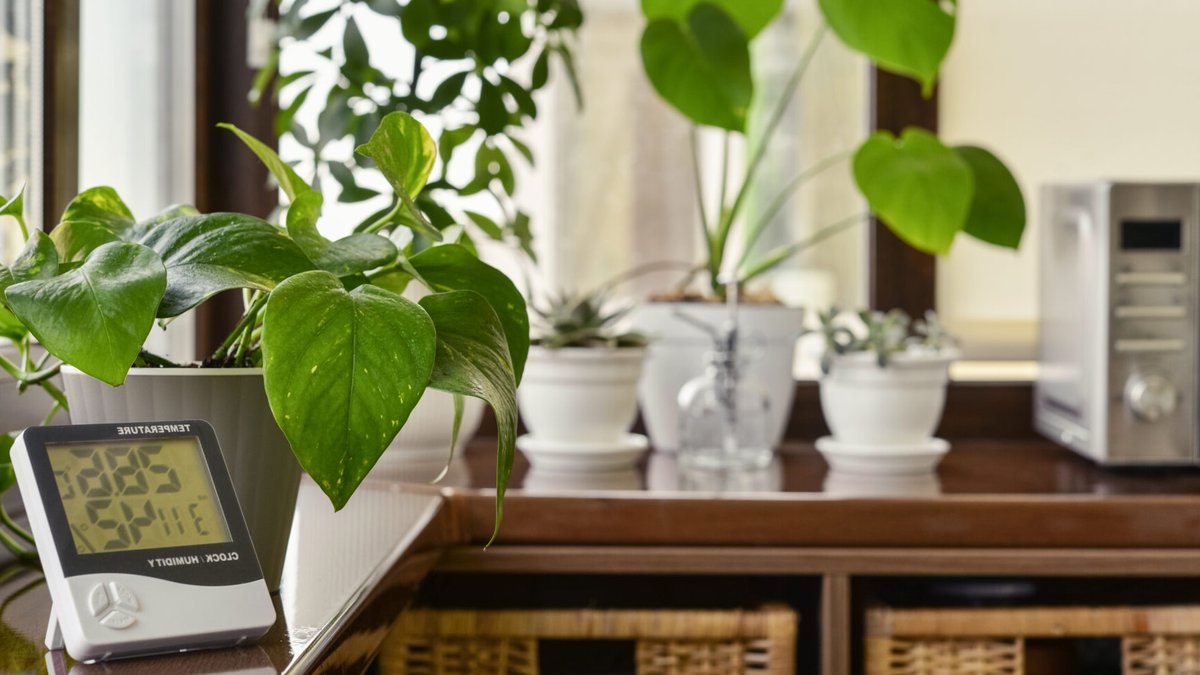
Most homeowners focus on temperature when adjusting their thermostats, but indoor humidity plays an equally important role in comfort, health, and home maintenance. The U.S. Environmental Protection Agency recommends keeping relative humidity between 30% and 50% to prevent mold, protect wood furniture, and avoid respiratory irritation. That range shifts slightly depending on the season and the room.
Air that’s too dry can crack wood floors, irritate skin, and trigger static electricity. Excess moisture encourages mold, dust mites, and warped furniture. Humidity above 65% can lead to microbial growth, according to the American Society of Heating, Refrigerating, and Air-Conditioning Engineers (ASHRAE). If your air is too dry, you can experience static electricity, dry skin, cracked lips, nose and throat irritation, and even damage to wood and flooring.
Tyler Lantrip, HVAC manager at The Meridian Company in East Lansing, Michigan, explains seasonal targets: 30%–40% in winter, 40%–50% in summer, and 35%–45% during spring and fall. Colder months require lower humidity to prevent condensation on windows, while warmer seasons allow for slightly higher levels to reduce static and improve comfort.
Room-by-room humidity guidelines
Not every space in a home should follow the same standard. Lantrip suggests these ranges:
- Living rooms and bedrooms: 30%–50%
- Basements: 30%–50%, but never above 50% to minimize mold risk
- Bathrooms: 40%–60%, with brief spikes during showers acceptable if levels return to 50% or lower afterward
Bathrooms and kitchens naturally see temporary increases in moisture. Exhaust fans or open windows—when outdoor humidity is lower—help restore balance. A simple tissue test checks if an exhaust fan works: hold a square of toilet paper near the grille while the fan runs. If the tissue sticks, the fan is functioning properly.
Related: Best States for LGBTQ Home Buyers
Basements need extra caution. Even minor leaks or poor ventilation can push humidity beyond safe levels. A hygrometer, which costs as little as $10, provides real-time readings. For larger homes, multiple devices placed away from vents and windows offer the most accurate measurements.
How to adjust humidity levels
If humidity is too high, running the air conditioner, using exhaust fans, fixing leaks, and storing firewood outside can help. Dehumidifiers become necessary when simpler fixes fail. For dry air, houseplants, water bowls near heat sources, and indoor laundry drying add moisture. Humidifiers—either portable or whole-house models—are the most reliable solution for persistent dryness.
Mold-related issues and airborne contaminants can worsen in damp environments, while overly dry air may aggravate respiratory health. The EPA recommends a standard indoor relative humidity level of 30%–50%.
Starting with a hygrometer and basic adjustments—like shorter showers or lidded pots while cooking—can make a noticeable difference.
“Proper indoor humidity is one of those invisible factors that quietly affects everything,” Lantrip said. “From your health to home maintenance, small adjustments can make a big impact.”
