The Twin Towers, once the tallest buildings in the world, are remembered by many for the events of September 11th, 2001. However, for one writer, the connection to the World Trade Centre began on a summer day in 1987, when, as a structural engineering student, he visited the towers with classmates.
At the time, the writer was in awe of the towers’ scale and design, and he wondered what it would be like to meet the engineer who created them. The engineer, Leslie Earl Robertson, was just 35 years old when he designed the revolutionary structure of the Twin Towers.
The Engineer Behind the Twin Towers
Leslie Earl Robertson was a visionary lead structural engineer whose designs saved thousands of lives on 9/11. His career was marked by innovation and a commitment to peace. Before becoming one of the world’s most respected engineers, Robertson had a varied career, including racing stock cars and operating filling stations.
Despite his difficult childhood, Robertson went on to attend the University of California, Berkeley, through the GI Bill, where his fortunes changed and his engineering career began. He was known for pushing boundaries and using cutting-edge technology, including IBM computers and wind tunnel testing, to design the Twin Towers.
Read Also: Modular buildings quality tiers explained
Robertson also considered the possibility of an airliner striking the buildings and designed a patented damping system to make the towers feel steadier for those working high above the city. His firm’s experience with high-rise design was limited before taking on the Twin Towers project, but he had previously worked with architect Minoru Yamasaki on a 20-storey IBM building in Seattle.
The attacks of September 11th had a profound impact on Robertson, who found himself questioning every design decision he had made. However, the engineering community praised his pioneering “tube” design, which helped keep the buildings standing longer than expected, allowing thousands to escape.
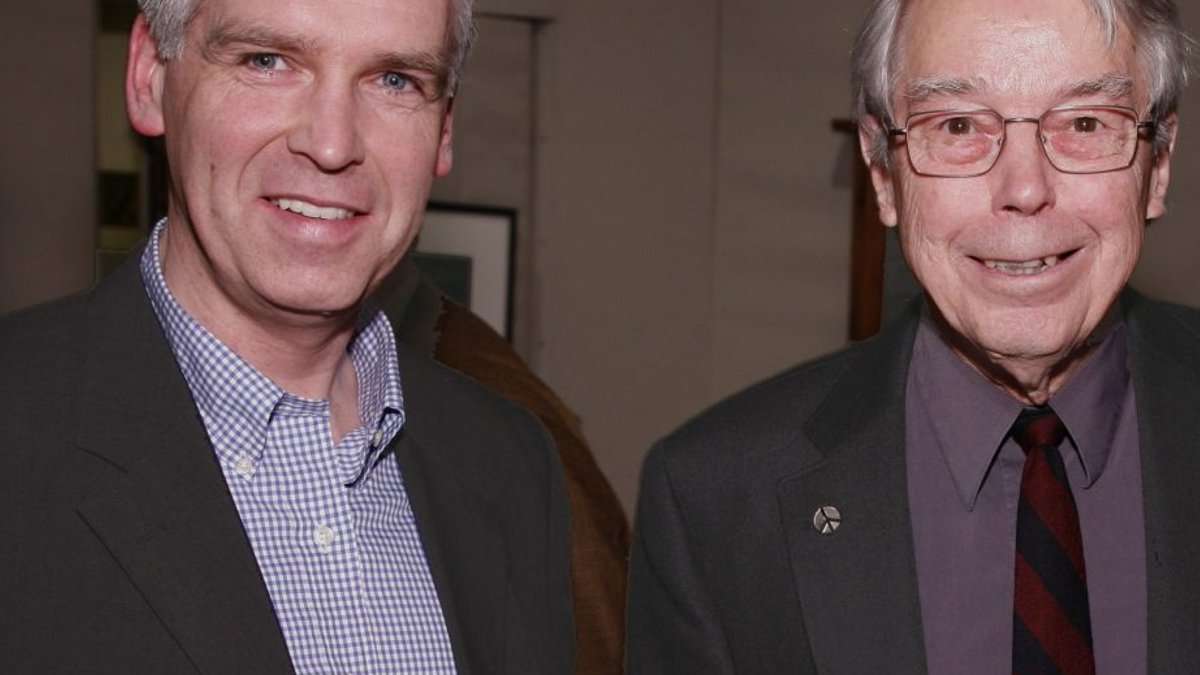
In the years following the attacks, Robertson dedicated his life to campaigning against war and promoting understanding between people of different backgrounds and beliefs. He frequently wore a small peace pin on his jacket and gave them away to others, hoping to inspire them to join his cause.
Waiting in Line for the South Tower Observation Deck
Like thousands of visitors before, the writer joined the queue for the South Tower’s observation deck on the 107th floor. The line stretched around the building’s base, moving slowly as visitors waited for the ascent. Visitors chatted softly, sharing anticipation for the panoramic view awaiting them above the city.
Read Also: Saint-Gobain Ireland marks 90 years of continuous manufacturing
Stepping away from friends, the writer stood in the shade between the tower’s massive aluminium-clad columns. Leaning against the cool metal, his eyes tracked the endless vertical lines disappearing into a brilliant blue sky. Clouds drifted overhead, creating an illusion that made the tower appear to move.
Dr. Declan Phillips, an associate professor, led the civil engineering and construction management programmes at the University of Limerick. He helped design UL’s civil engineering curriculum, emphasizing a learning-by-doing approach since the programmes began in 2005.
A Lasting Legacy
Leslie Earl Robertson passed away in February 2021, one day before his 93rd birthday. His legacy extends far beyond his engineering achievements, as he set an example as a human being through his commitment to peace and his generosity with his time. In 2007, he visited a primary school in Tramore.
As the writer reflects on his friendship with Robertson, he is reminded of the engineer’s warmth and humanity, which defined his greatest legacy. The writer was fortunate enough to meet Robertson and learn about his career, which was marked by innovation, perseverance, and a commitment to making the world a better place. Robertson visited the University of Limerick in 2007, where he was awarded the highest honour by Engineers Ireland.
Read Also: Jamaica Tightens Rules on Property Ads
One of the most remarkable aspects of Robertson’s story is the way he approached engineering, treating steel like a master chef treats ingredients, using only what was necessary and making every bit count. This approach, combined with his innovative use of technology, allowed him to push the boundaries of what was possible in engineering. The result was a series of designs that not only saved lives but also inspired a new generation of engineers.
As the writer stood in the shadow of the Twin Towers on that summer day in 1987, he couldn’t have imagined the impact that Leslie Earl Robertson would have on his life. Their friendship, which began with a phone call in 2005, would go on to profoundly enrich his life, and he would come to realize that Robertson’s greatest legacy was not his engineering achievements, but the example he set as a human being.
The writer’s connection to the World Trade Centre, and to Leslie Earl Robertson, is a sign of the power of human connection and the impact that one person can have on another’s life. As the writer looks back on his friendship with Robertson, he is reminded of the engineer’s words, and the way he lived his life, always striving to make the world a better place, one design at a time, and the way he used his experiences, including his time in the US Navy, to inform his approach to engineering and his commitment to peace.
