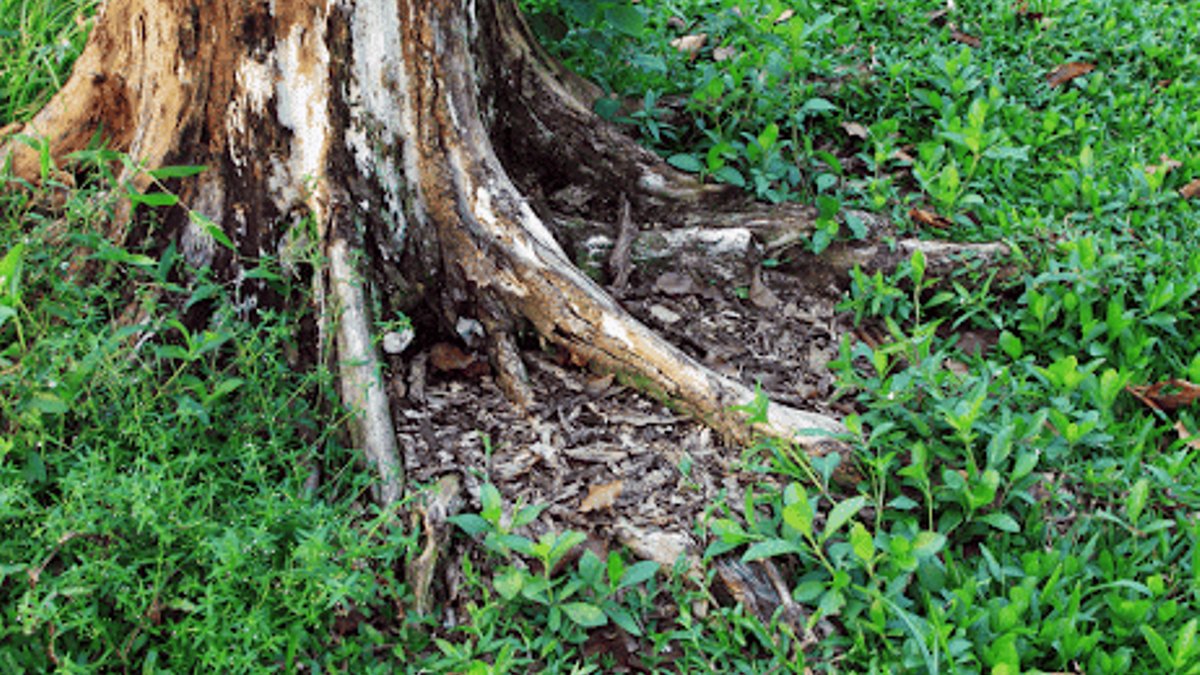
A tree stump in the yard creates problems beyond appearance. It attracts termites, supports fungi, and sprouts new growth that becomes unwanted saplings. Homeowners face choices from a $10 bag of Epsom salt to a $500 professional grind. The best method depends on the stump’s size, tree type, and how quickly the job must be finished.
Natural methods: slow but low-cost
Epsom salt offers the cheapest chemical-free solution. Drill a dozen 1-inch-wide, 10-inch-deep holes into the stump, fill them with salt, then add water. Cover the stump with a tarp to prevent rain from washing the mixture away. Repeat monthly. The stump should die within two to three months, though full decay takes six to twelve months. Epsom salt is affordable and widely available at garden stores.
Smothering the stump with a thick, waterproof tarp or black trash bag also works. Secure the cover with rocks or bricks. Without sunlight, the stump dies in six months or longer. This approach requires little effort after setup.
Boiling water provides the fastest natural start by shocking the root system immediately. Uncover as many roots as possible, drill holes into the stump, then pour boiling water until the wood is saturated. Repeat every few weeks to maintain progress.
Rock salt dehydrates the stump and speeds decay but risks harming nearby grass and flowers. Drill holes, pack them with salt, cover with soil and mulch, then keep the area damp to encourage fungal growth. Avoid this method if the stump sits near flower beds or vegetable gardens.
Related: Waccabuc Lake retreat celebrates peaceful woods setting
Physical removal: faster but harder work
Digging out a stump works well for small to medium trees with shallow roots. Use a shovel to expose the roots, then cut through them with a hatchet, handsaw, or chainsaw. Smaller roots can be clipped with loppers. Once severed, the stump can be lifted out. Renting a root-cutting saw saves time on larger stumps.
Burning a stump is illegal in some areas due to fire risk. Check local regulations before attempting it. Drill 2-inch-wide holes at least 8 inches deep, fill them with kerosene, and let it soak overnight. Pile dry wood chips on top, ignite carefully, and monitor the fire until the stump burns to ash. Gasoline should never be used—it burns too fast and unpredictably.
Stump grinding delivers the quickest results. Rent a grinder for $100–$400 per day or hire a professional for $150–$500 per stump. Trim the stump close to the ground, remove nearby rocks, then use the grinder to chip the wood down 6–12 inches below the surface. The hole can then be filled with soil and mulch.
For those willing to wait years, exhausting the tree’s food reserves remains an option. Every time new sprouts appear, cut them off immediately. Over time, the stump will run out of energy and die. Consistency is key—missing a few sprouts resets the process.
An untreated stump can become a long-term project. A healthy oak or maple stump may take three to seven years to rot naturally. Even after death, the wood remains a tripping hazard and a home for pests. The decision between a weekend of digging and a year of waiting often hinges on how much the yard’s appearance matters.
Related: Solano Grand and Wynwood Grand: A Simple Guide to Understanding Property Value Growth
Chemical options: speed with caution
Bleach, diesel, motor oil, and weed killers are sometimes suggested as DIY solutions but carry risks. Bleach can alter soil pH and kill nearby plants. Diesel burns too fast to be effective. Motor oil is costly and not designed for stump removal. Weed killers target foliage, not wood, and fail to penetrate deep enough to kill roots.
Foliar sprays and simply cutting the tree down are ineffective. Spraying herbicide on leaves only kills the foliage, not the stump. Cutting the tree without treating the stump leads to new growth, leaving the problem unresolved.
Once the stump is removed, the hole can be filled with soil and planted over. Some homeowners leave the mulch to break down naturally, while others remove it for a cleaner look. Either approach restores the yard’s usability.
Financing the project may influence the choice of method. Comparing home heating system costs can help homeowners budget for larger removal jobs.
