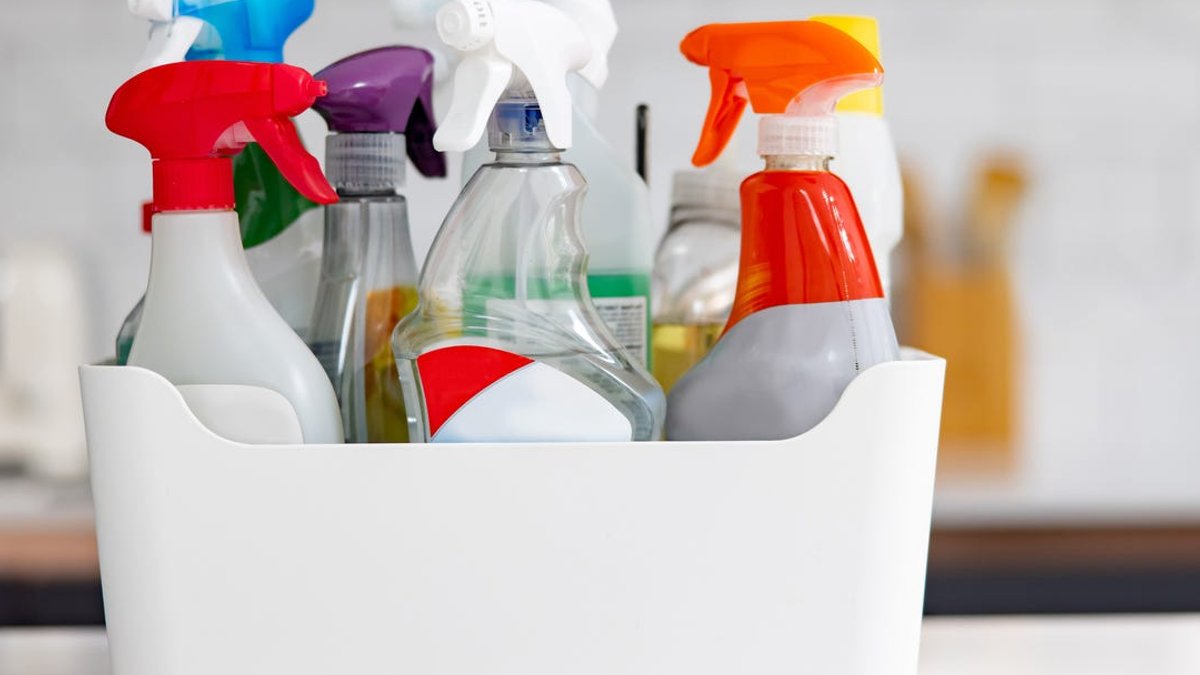
Most people keep cleaning supplies wherever space allows, often under the kitchen sink or in whatever cabinet offers room. But where these products are stored affects their longevity and safety. Professional organizers and experts from the Good Housekeeping Institute Home Care Cleaning Lab recommend specific locations and storage methods to ensure products remain effective and safe.
The best storage spot
Experts agree that the ideal storage location is a caddy kept in a cool, dry, and accessible area. One organizer who ran a cleaning service for seven years stated that keeping supplies near the point of use allows for faster, more efficient cleaning. A storage company owner who sorts supplies by task further recommends grouping items by room. For example, a bathroom caddy holds glass cleaner, disinfectant spray, a scrub brush, and paper towels, while a kitchen caddy contains dish soap, all-purpose spray, a sponge, and a trash bag. Items that do not belong to a single room belong in a hall closet. This organization prevents a caddy from becoming a cluttered drawer.
Why a garage is a bad idea
A garage is widely considered the worst place to store cleaning products. One expert noted that a summer in Northwest Indiana can cause sealed containers to bulge and labels to peel. Temperature extremes degrade product formulations and increase pressure inside aerosol containers. Heat accelerates this process, while cold can also impact certain chemicals. Oxygen-based products, such as sodium percarbonate, lose potency in high heat and moisture.
Basements pose a different risk due to high humidity, which can damage packaging and compromise powdered cleaners. Bleach is the sneakier casualty, gradually losing active chlorine over time, with heat speeding that up. Some products lose efficacy without visible changes to appearance or smell. A change in consistency or damaged packaging is a clear sign to replace a product, though the manufacturer’s guidance on shelf life should also be followed.
Risks under the sink
Despite its popularity, storing cleaning supplies under the sink carries significant risks. One organizer estimates that about 40 cabinets have had bottles leak around pipes, often undetected by homeowners until a move. If an under-sink cabinet is the only option, experts suggest using a bin to catch leaks, a riser to keep bottles off the floor, and a liner underneath. A periodic check every few months can catch problems early.
Many consumers own more cleaning supplies than they actually need. “I see that people purchase too many cleaning supplies,” Cathy Orr says, a master consultant in the KonMari Method® with more than 20 years of organizing experience. “Many supplies can do double duty. If you only purchase a few, you’re bound to use them up.” She owns about 10, total: dish soap, dishwasher pods, a counter spray, toilet bowl cleaner, a stainless steel cleaner and a wood cleaner. She adds one non-negotiable—pick something that smells good to you. “Use a scent that you love and makes you feel happy. To me, that sparks joy.”
