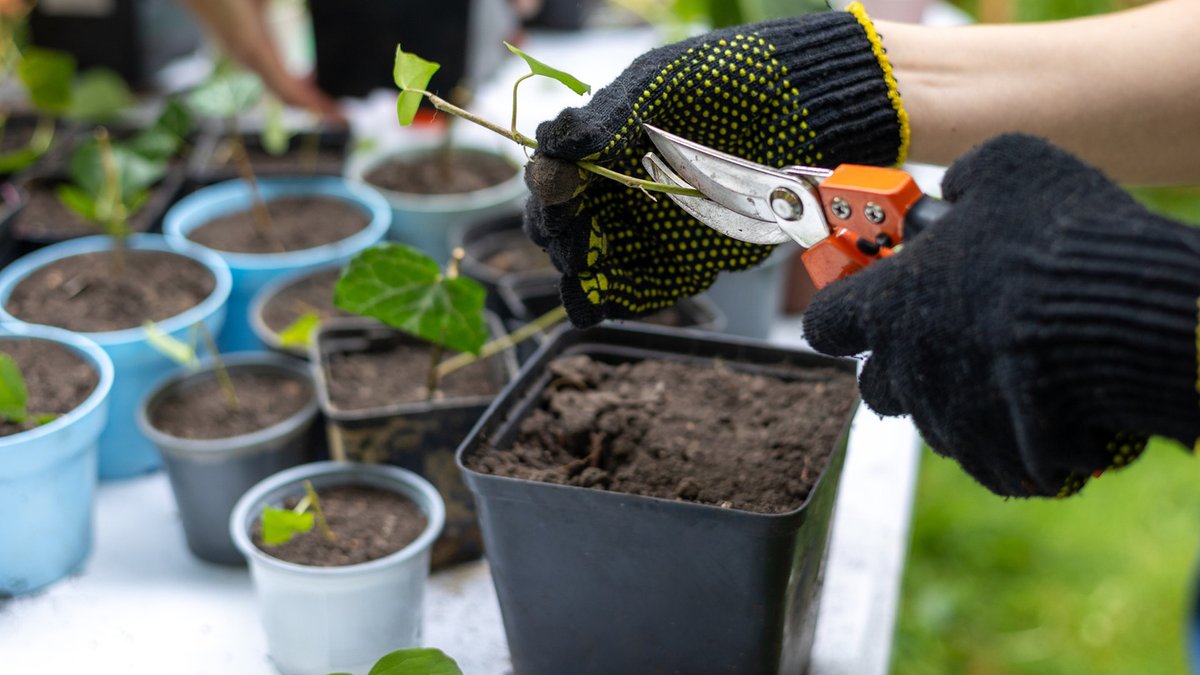
For many plants, the growing season is drawing to a close as the first frost approaches. September is the final window to take cuttings from your outdoor plants before they enter dormancy or become too woody to root. Propagating now ensures you have new plants for next year without the cost of visiting a nursery.
Geraniums (Pelargonium spp.)
Geraniums are technically perennials, but they rarely survive winter outside in colder climates. To keep them going, you must bring them indoors. Taking cuttings now gives you a larger selection of flowers for the next season and provides backups in case the main plants don’t survive the winter indoors. A cutting should be at least 4 inches long. Snip the stem below a node and place it in soil to grow a plant ready to bloom by spring.
Fuchsias
Fuchsias are among the easiest plants to propagate, making them a reliable choice for gardeners looking to expand their stock. Before the fall frost arrives, snip a section of stem that is at least 5 inches long. You can start the cutting in water to watch the roots develop or plant it directly into soil. Be sure to remove the bottommost leaves before planting. Using an egg carton as a propagation station offers a sustainable way to manage multiple cuttings.
Camellias
Camellias are best propagated during late summer or early fall, ideally before the stems harden in mid-autumn. Cut a section of stem that is at least 4 inches long and free of flowers. Choose a brown stem that is still flexible. To encourage root growth, strip the bottom leaves and a small section of bark from the base of the stem. These cuttings can take up to two years to flower.
Lavender (Lavendula spp.)
While summer is the prime time for drying lavender, September remains a suitable time to take cuttings for propagation. It is best to take these cuttings while the plant is still in its growth season, which ends after September. Select a cutting that is at least 4 inches long and has nodes. Strip the leaves from the cutting to prepare it for planting in fresh soil.
Hydrangeas
Hydrangeas are rarely grown from seed, so propagating from cuttings is the standard method for increasing the garden stock. September is the last chance to take cuttings before the plant turns to hardwood. Look for younger, bendable growth and cut off a piece that is at least 4 inches long. Place the cutting in soil and wait for the roots to develop. It can take up to two months for the roots to be strong enough to repot.
Many gardeners treat verbena as an annual because it cannot reliably survive the winter outdoors. Taking cuttings before the first frost arrives guarantees you will have plants to enjoy next year. September is typically the final opportunity to harvest a softwood cutting of verbena, so it is important to get these plants into the soil before the month ends.
Butterfly Bush (Buddleja davidii)
The butterfly bush is known for attracting pollinators, so having multiple plants can benefit the local ecosystem. This shrub should also be propagated in September. Take a cutting that is at least 4 inches long and remove any flowers from the tip. If you take the cutting before October, it will be ready to plant directly in the garden the following year. Roots typically form in under two months once planted.
