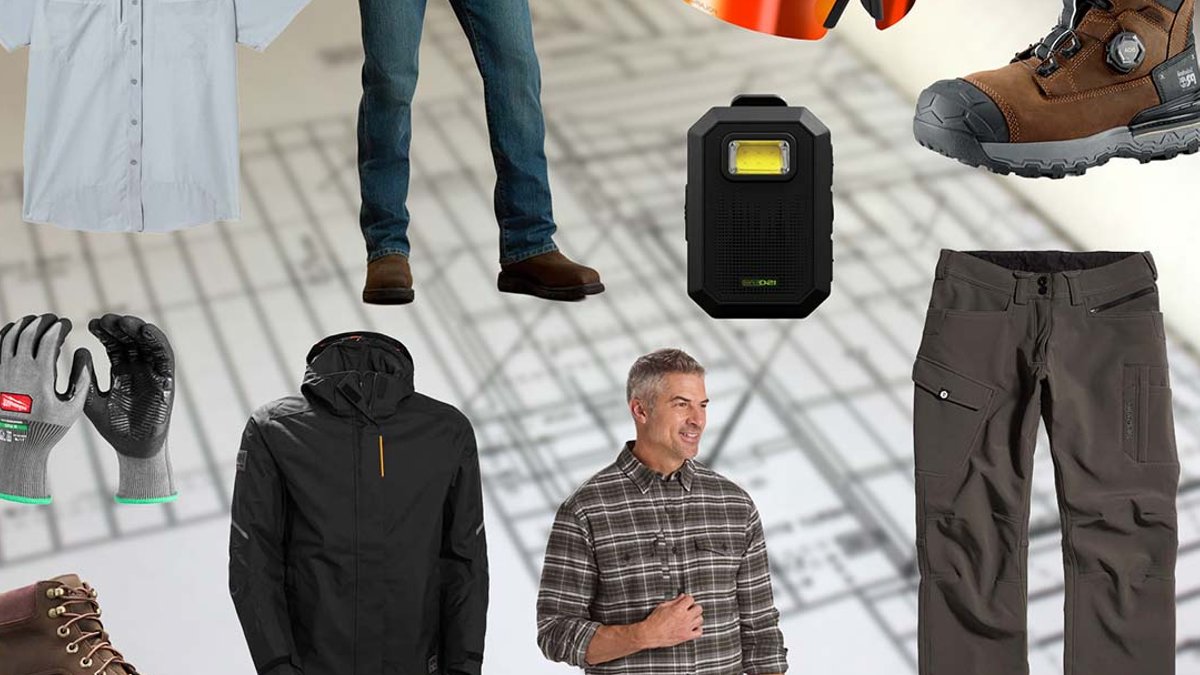
As September arrives, workers in construction, landscaping and agriculture face a patchwork of temperatures, from lingering heat in the South to early cold fronts up north. The transition calls for clothing that can handle humidity, wind and occasional rain without sacrificing safety or mobility.
Footwear that balances safety and comfort
Timberland Pro Boondock UL work boots use a dual‑dial BOA Fit System that lets wearers tighten the foot and ankle zones separately. The system promises a micro‑adjustable fit, while Hover Spring foam and anti‑fatigue technology cushion each step. Premium leather resists abrasion and water, and an antimicrobial lining helps keep odors at bay.
The boot’s composite safety toe provides protection, and the TPU outsole offers slip‑resistant traction on wet surfaces. It’s marketed for all‑day performance in varied environments, from concrete pads to muddy fields.
Related: Milwaukee M12 Fuel Ratchet Gets Tested
Tecovas Longhaul Waterproof Moc boots bring a classic moc toe design to the jobsite. They combine a composite safety toe, electrical‑hazard protection and an oil‑and slip‑resistant outsole, all ASTM‑rated, and feature full waterproof construction. The brand’s Total Energy Command (TEC) system layers cushioning in the insole and outsole, eliminating the need for a break‑in period.
Brunt’s Ohman work boot is noted for its comfort, with noticeable cushioning on each step. An upgrade for fall includes a USA‑welted version available with a soft toe or a composite safety toe, offering added durability.
Apparel for changing temperatures
For base layers, Forgeline Cozy Dell introduces a merino‑wool blend tee. The fabric mixes 52% 18.5‑micron merino wool with 48% recycled polyester, preserving wool’s odor‑fighting qualities while maintaining shape when wet. Merino’s natural moisture‑wicking helps regulate temperature, a benefit highlighted in the Wikipedia entry on merino wool.
Duluth Trading’s new flannel shirt blends 74% cotton with 23% CoolMax polyester and a touch of spandex. The CoolMax component promotes breathability and moisture transport, while the polyester‑spandex mix adds stretch. Gusseted sleeves and a zippered chest pocket round out a design meant for both work and casual wear.
Related: Hammer Heads Compared in Tool Test
When the wind picks up, Truewerk’s T3 WerkPant offers a three‑layer construction: a ripstop nylon softshell, a polyurethane membrane and an interior Hex Fleece layer. The DWR finish repels water, and the 4‑way stretch allows unrestricted movement.
The pants aim to replace bulkier insulated options without compromising warmth.
Denim remains a staple for many tradespeople. The Ariat Rebar M4 relaxed‑fit jeans combine 67% cotton, 32% polyester and 1% spandex, delivering a 13‑ounce weight and ToughMax fibers for added durability. The boot‑cut leg opening accommodates a range of work boots, and the relaxed cut eases bending.
Related: Breaking Down Gas Boiler Costs
Outdoor brands are crossing into workwear, as seen with KUIU’s Groundwork Work Pant. Constructed from a 90% nylon, 10% spandex blend, the pants weigh 226 grams and feature zippered mesh vents on the thighs for airflow. Built‑in knee‑pad pockets and removable AirWerk pads add protection without bulk.
For those who prefer bibs, Truewerk’s T3 WerkBib mirrors the pant’s three‑layer system but adds true 4‑way stretch and integrated knee‑pad pockets. Removable AirWerk pads keep the bib lightweight while offering support during kneeling tasks.
The Truewerk Woobie WerkJacket with hood draws inspiration from military issue “Woobies.” An 80 gsm insulation layer provides warmth without the heft of a winter coat. Articulated sleeves, a moisture‑wicking liner and DWR treatment keep the wearer comfortable in crisp fall weather.
