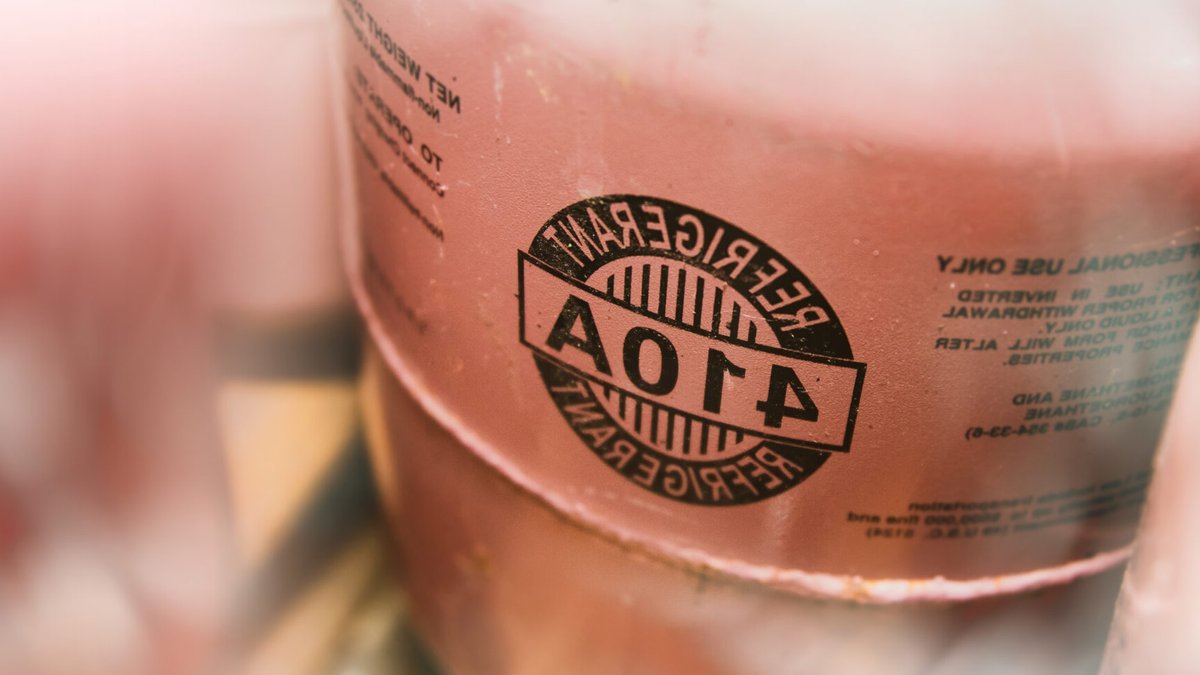
R-410A has served as the standard refrigerant in residential HVAC systems since 2010, but new regulations are pushing it out. The U.S. and the European Union (EU) banned the production of R-22, known as Freon, in 2010, and a similar phaseout is now targeting R-410A. This shift is driven by government efforts to reduce high-global warming potential (high-GWP) refrigerants, which trap heat in the atmosphere and contribute to climate change. The phasedown began in January 2025, according to Tim Alagushov, co-owner and chief operating officer of IRBIS Air, Plumbing & Electrical in San Jose, California.
Ninety percent of HVAC systems currently use R-410A, but the supply will slowly decrease. The U.S. Congress passed the American Innovation and Manufacturing (AIM) Act in 2020, directing the Environmental Protection Agency (EPA) to phase down production of HFCs like R-410A. This process aligns with the Kigali Amendment to the Montreal Protocol, an international agreement ratified by over 115 countries to reduce global warming. While R-410A is not completely banned, new HVAC systems will eventually be incompatible with it as manufacturers transition to alternatives.
Related: How to Restore Old Windows in Simple Steps
The two refrigerants expected to replace R-410A are R-32 and R-454B. The HVAC industry is rapidly adopting R-454B, but R-32 is also a viable option. R-32 is more efficient than R-454B but has a slightly higher global warming potential. R-454B offers slightly lower efficiency but has a lower GWP than R-410A.
Impact on Existing and New Systems
If you already have an R-410A system, you generally don’t need to replace it right away. The refrigerant is still widely available, and your system can be serviced and recharged as needed. However, costs will likely rise over time as the supply shrinks. Alagushov noted that the cost of repair often becomes prohibitive once a refrigerant is phased out. “Usually, it makes sense to replace an HVAC system when there is a difference in cost,” he explained. “For example, we had customers whose systems were leaking R-22. The cost of repair was through the roof because R-22 was phased out. It was much more efficient to replace the system with one that uses R-410A refrigerant.”
Related: Testing an AC Capacitor and What Comes Next
For new installations, you should look for systems using R-32 or R-454B. These systems are becoming the standard as older models are phased out. You can identify the refrigerant type by checking the nameplate on the outdoor condenser, which lists the unit specifications. If you are unsure, consult your owner’s manual or contact a technician.
When you do replace an older system, you might qualify for HVAC tax credits designed to encourage environmentally friendly upgrades. Many manufacturer warranties also don’t extend beyond 10 or 15 years, so planning ahead can save money in the long run. Alagushov suggested that the switch to new refrigerants will likely happen in five to 10 years, when the cost of maintaining R-410A systems becomes too high.
